How Will the Markets Respond to the Fed's 50 Basis Point Cut?
The market’s reaction was fascinating. Bonds told a very different story to stocks and the dollar
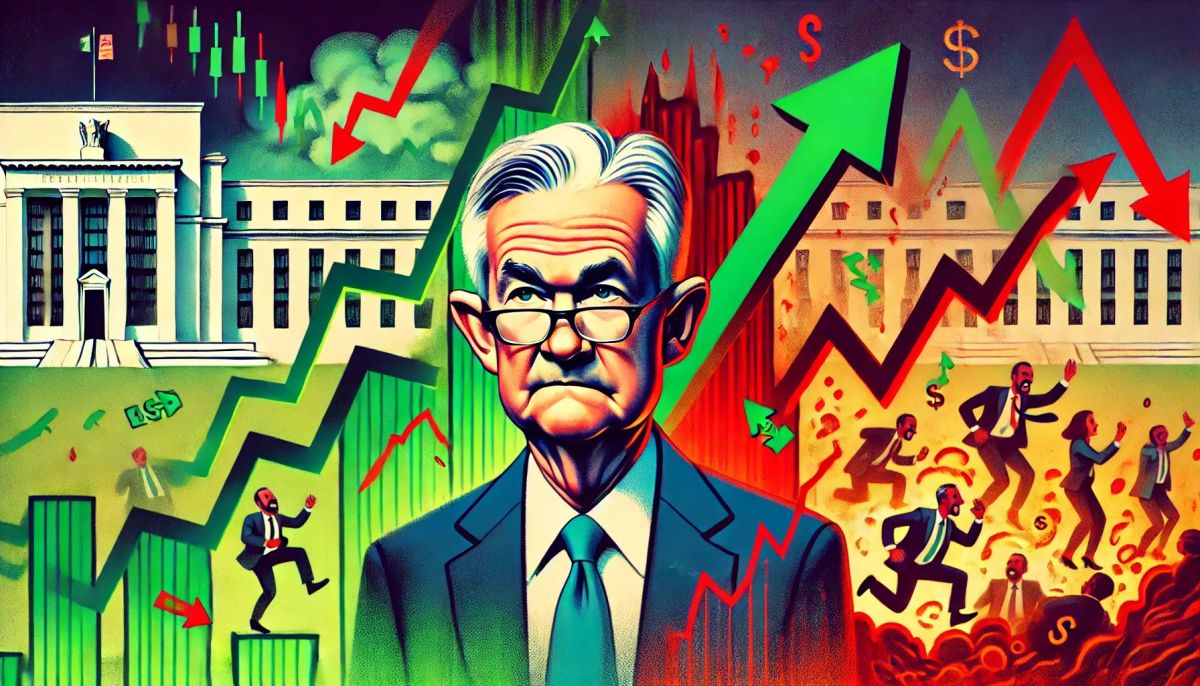
Today the Fed cut interest rates by fifty basis points, lowering the Fed Funds target range to 4.75% to 5%. This was a very interesting move for a variety of reasons – some obvious and some not so obvious. Aside from being the first rate cut by the central bank since March of 2020, it was also a very aggressive move that didn’t make sense to most top analysts. Yes, expectations were somewhat divided about whether the Fed would go with a half-point cut or a quarter-point cut, but almost no economists expected the larger rate cut.
Putting things in context, it is important to remember that the Fed has been talking about lowering rates since the end of 2023. Their original plans got derailed when inflationary pressures unexpectedly popped higher in the first quarter of this year. Although the Fed finally got to make its move today, there was also some unwanted and highly controversial drama when senior Democratic senators wrote a letter to the Fed this past Monday, trying to pressure the Fed into implementing a 75-basis point rate cut. Wow! The Fed is supposed to be an independent entity that is immune from political pressures, so this widely circulated letter created a huge amount of unwanted noise. The senators maintained that the Fed should lower rates by 75 basis points to mitigate potential risks in the labor market. A move of this magnitude would be highly unusual under normal circumstances as a 75-basis point policy shift is nearly always reserved for economic emergencies. A move by the Fed of this size after receiving such a letter would have been both shocking and highly damaging to the Fed’s reputation, although it is not unreasonable to think that the Fed went for the larger rate cut of half a percentage point as a partial appeasement to some powerful political figures. Overall, the letter was highly inappropriate in every way as the Federal Reserve Board is supposed to be an independent organization that is immune from political pressures. Hmmm. Perhaps these senators “forgot” about the Fed’s alleged independence. Of course, senior Republican politicians also try to influence the Fed, but this was quite extreme.
The market’s reaction to the rate cut was fascinating. Stocks tried to rally, but they were met with selling pressure, closing slightly lower on the day. The dollar likewise chopped around, selling off initially and then rallying a bit into the close. The bond market, however, told us a very different story. Yields in the 10-year treasuries jumped by nearly 4 ½%, and the yield curve steepened overall. This was a very sharp move in the bonds, and it tells us a very different story than the one Powell tried to portray in his press conference.
The bottom line is that Powell spoke out of both sides of his mouth during the press conference. First, he noted that the central bank’s decision to aggressively cut rates one half of a percent was primarily focused on stabilizing employment conditions. He then tried to shift his position by saying that the move to lower the Federal funds rate “reflects our growing confidence that with an appropriate recalibration of our policy stance, strength in the labor market can be maintained in a context of moderate growth and inflation moving sustainably down to 2%.”
Powell then insisted that the overall sweep of labor data shows the job market is still solid, and that the current unemployment rate of 4.2% is very healthy. If the labor market is really healthy and in good shape, as Powell maintained, and if the Fed is truly data dependent as Powell always maintains, then why did they make the aggressive move of cutting rates by fifty basis points? Why would stabilization be required? This makes no sense.
Unfortunately, Powell can’t maintain the nonsensical view that the Fed is truly data dependent when they are taking precautionary steps to boost the economy and ensure the strength of a labor market that he asserts is in good shape. If the data is accurate, then there is absolutely no justification for today’s aggressive move. Also, we can reasonably assume that lower interest rates will reduce borrowing costs for mortgages, auto loans, and credit cards, thereby boosting consumption and economic growth. This will in turn very likely trigger a pick-up in inflation if in fact economic conditions are in good shape, as Powell maintains. Given the Fed’s dual mandate of maximizing employment while maintaining stable prices, risking another sharp rise in inflation sounds very risky. Moreover, Powell suggested that there will be multiple interest rate cuts to follow over the coming months. The Fed can’t have it both ways, and both stories can’t be true.
It is impossible to square the circle of Powell’s obvious contradictions, so let’s try to figure out what is really happening. I have been writing for months that current financial conditions in the US do not justify a rate cut. By the Fed’s own measure, conditions are looser now than they were when the Fed belatedly started to raise rates in 2022. (See the Fed’s latest Financial Conditions Chart below.) Moreover, the Fed’s so-called data dependency back in 2021 landed us all in a big mess, leading to the highest inflation levels in several generations following Powell’s insistence that our inflation was transitory. In fact, the Fed steadfastly refused to react to the obvious inflation data and hike rates back in 2021, so their data dependency was actually a classic example of ignoring the data that was screaming for attention. Three years later, and with many people currently feeling the severe pain of the cumulative price rises, we now know for sure that the Fed often gets it very wrong. If they were data dependent, then why didn’t they react to the data back in 2021. If they are data dependent now, then why did they just cut rates by fifty basis points if the labor market is in good shape?

So what is really happening now? Yes, unemployment levels have been drifting higher, and it portends further softening in the labor market, but we are still at very low levels by historical standards. In fact, unless the data is completely misleading, as I have also been suggesting, the labor market is by all appearances quite solid. To that extent, I agree with Powell. The hiring rate has softened, but the “official” level of unemployment is hardly a worry. The action of the Federal Reserve today is actually quite disturbing, but in many ways, it confirms my worst fears. Either the real employment picture is much, much worse than the current data suggests, or the Fed is under the thumb of some politicians – or perhaps there is a combination of both.
I would prefer to not get started with speculation about the Fed’s political links, as that is a rabbit hole best left alone. The labor data, however, is something I am more than willing to address. We have seen enormous revisions to the jobs data every month, and the revisions have always been lower. We have also seen huge divergences between the labor data and the household data, which suggest that an enormous number of jobs that have been created are part-time jobs for people working two or three jobs. If it is the case that the economy is actually performing much, much worse than the authorities want us to believe, then the Fed’s move today makes sense. The authorities just don’t want us to realize the truth as it would frighten us and make a sharp economic downturn almost inevitable. Yes, strong fear can make ugly outcomes self-fulfilling. This could very well be a perfect instance of the authorities trying to put on a brave face about how good things are while simultaneously taking steps to mitigate the actual weakness that lies hidden beneath the deceptive economic data.
Consider the following chart depicting the Federal deficit over the past 123 years. The current Federal deficits are absolutely massive, and the pace of growth in the deficits is scary. These deficits are both dangerous and unsustainable over the long run without incurring staggering risks for our economy. They are also inconsistent with very modest growth, if in fact the underlying economic growth is actually solid and stable. With Federal borrowing and spending at this rate, one should be able to safely assume extremely high economic growth rates. We saw that with the unification of Germany when the German government borrowed and invested tremendous sums of money, triggering extremely high growth rates for the country for years. The obvious question here is how massive Federal fiscal deficits, and the associated Federal spending of many trillions of dollars, don’t lead to tremendous economic growth if the economy is actually in decent, let alone solid, shape. Clearly, there must be some underlying economic weakness that the loose financial conditions and gigantic Federal spending are masking. It is blatantly obvious from the acceleration in the annual deficits that abandoning the gold standard in the 1970s was a dramatic and ill-founded idea to the extent that maintaining a stable and sensible Federal budget is a reasonable goal. We certainly don’t have that now, and it is only going to get worse. Interest expenses now exceed our military budget, and this is a very, very frightening development. We are nearly assured of a long-term dollar depreciation in order to try to manage our deficits.

The following chart showing the Federal deficit as a percentage of GDP is likewise very telling. Remember, the Federal deficit is actually set to worsen this year – both in absolute terms as well as in percentage of GDP -- putting our overall deficit at a level that supersedes all prior emergency spending programs except for the period around Covid, the Great Recession, and the Second World War. We should never see deficits like this unless we are in a recession or a severe crisis of some sort.

Both political parties are responsible for this mess, and they should be embarrassed about the legacy they are leaving our children and grandchildren. Theoretically, we have had a strong economy in recent years, but the government borrowing and spending figures negate that story. Plus, these figures don’t begin to capture the pain of the cumulative price rises which are squeezing and choking the majority of Americans.
This brings me to revisit one of my favorite trades for the past several years – being long gold. I have been pushing the idea of getting long gold since August of 2022. Yes, I have also recommended periodically reducing the exposure and then buying pullbacks of roughly ten percent, but there should still be plenty of upside. Gold is up nearly 25% this year, and although it is getting a bit overbought short term, there is still room to go in the big picture. Being long silver has been another favorite trade of mine, but the volatility in silver can be quite extreme.

While stocks have been good performers this year, with the S&P500 and DJIA making new all-time highs today, they are only up 18.5% and 10% for the year, respectively. The Nasdaq made its all-time high in July, and it is currently up about 15% on the year. These are good returns, and I still think we can get a bit more of a rally here in the equity markets, but gold has outperformed them. Eventually, I expect the equity markets to run out of gas and turn down sharply. I just haven’t decided yet when that will happen.
In the currencies, dollar yen is finally correcting its sharp drop to 139.60. I have been pushing the long yen idea for many months, so it is particularly gratifying when the move finally takes place. In the big picture, I don’t think the overall move is done. I suspect this current short-term rally will run out of steam quickly. It feels like a short squeeze as lots of speculators plowed into long yen bets when the dollar made a new low on the year, taking out the prior low of 140.25. Barring any major surprises, I still expect dollar yen to resume its trade lower once this squeeze is done. I have multiple targets, but the most obvious one is between 127.50 and 128.50. It would not surprise me to see this level tested over the next six to eight weeks. The key is to be patient with the moves and not get too bothered by the periodic short-covering bounces. As noted previously, I have structured some longer term option plays to capture these moves, so I need to also remind myself to remain patient.
I want to leave you with two more charts to look at. The first one shows a massive increase in the liability levels of nonfinancial corporate companies. This is definitely a disturbing graph, as the liabilities have essentially exploded higher.

The final chart shows us the net savings rate as a percentage of gross national income. This chart depicts an even more frightening picture of just how stretched people have become due to the cumulative price increases in recent years. Savings have been very heavily depleted, making most people in the US extremely vulnerable to a sharp economic contraction coupled with higher levels of unemployment. If Powell focused his discussion on these sorts of things, the fear that he would trigger would likely make the worst-case scenarios self-fulfilling. I understand intellectually why Powell doesn’t want to discuss these things at his press conferences. The implications of these things are very disconcerting, as they show clearly where major vulnerabilities lie in our system. Speaking selfishly, I just wish I didn’t need to do so much digging to figure out the truth about what is happening.

Whether we look at extremely low savings, high levels of liabilities, overstated job growth, massive refinancing needs in commercial real estate, or a host of other issues, the reality is that Powell will continue to press for more rate cuts. We need to be mindful of the fallacious stories the authorities tell us about the strong economy and solid job market. Things are much more tenuous than they would like us to believe. Also, please don’t equate the stock market with the economy. The stock market is not the economy, and the performance of one can be largely divorced from the performance of the other.
In the meanwhile, I wish you all the best of luck with your trading.
Andy Krieger