Investor Report: Global Market Outlook Amid the Reshaping of U.S. Foreign Policy
January 11, 2026
Thoughts on the Market
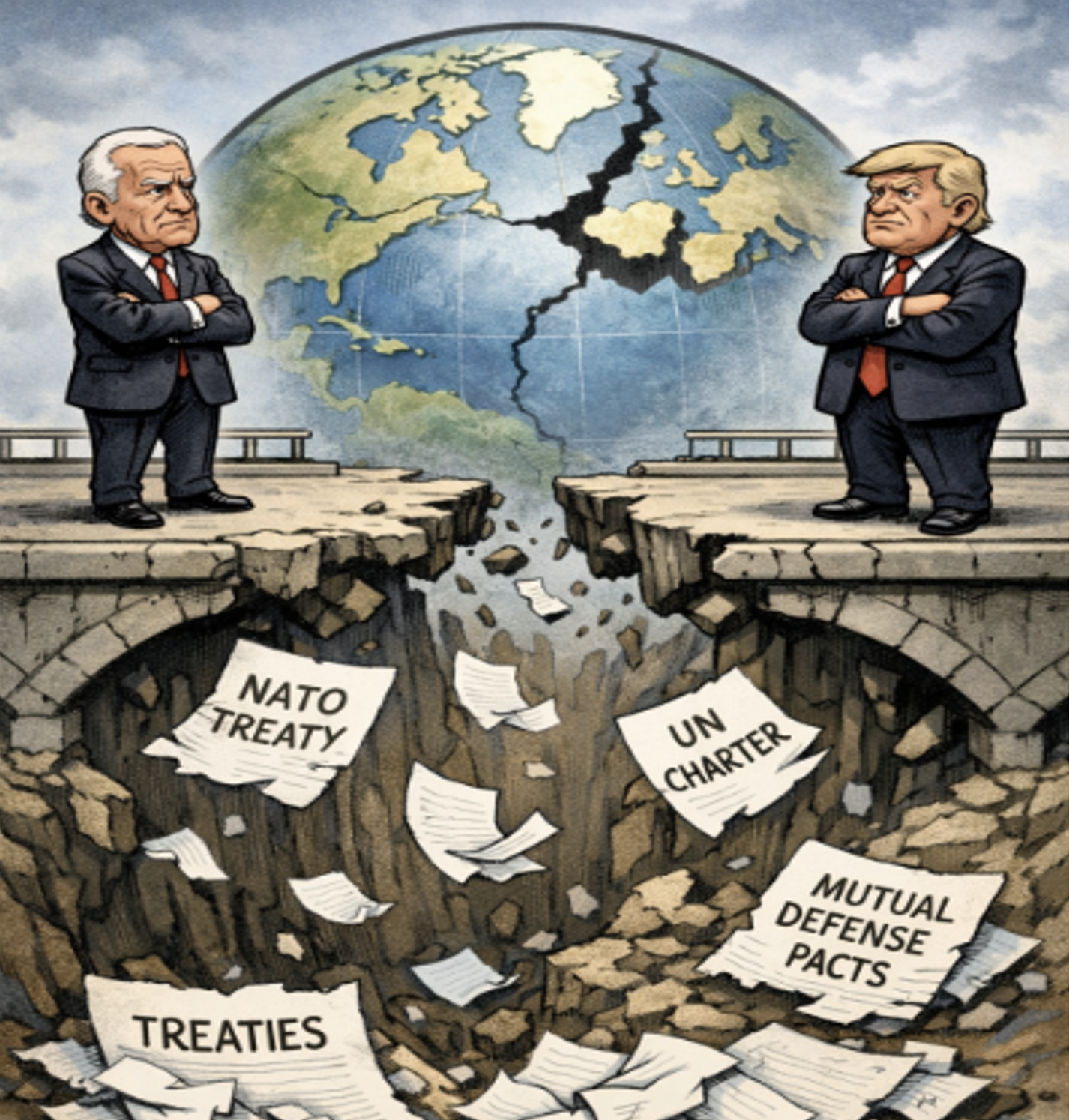
The global macro landscape has entered a period of profound structural disruption. Over the past year, the United States—under the direction of President Trump and guided heavily by the worldview of senior advisor Stephen Miller—has abandoned the post‑World War II framework of alliances, norms, and multilateral institutions. In its place, the administration has embraced an explicitly power‑centric doctrine: global affairs are governed by strength, force, and unilateral action.
The U.S. military operation in Venezuela, culminating in the capture of President Nicolás Maduro and the establishment of de facto American trusteeship over the world’s largest oil reserves, marks a decisive break with 80 years of U.S. foreign policy. This shift carries far‑reaching implications for commodities, currencies, sovereign credit, global equities, and the long‑term architecture of international trade and finance.
We received initial warnings about this dramatic shift when Trump implemented the most severe global tariffs in nearly 100 years on U.S. allies and foes alike, but the recent moves remove any doubts about his true intentions. Investors must prepare for a multi‑year period of elevated geopolitical volatility, sanctions‑driven fragmentation, and shifting commodity flows – alongside selective opportunities in energy, defense, and distressed sovereign debt.
The World Has Changed -- And Markets Are Only Beginning to Price It In
The global environment has entered a phase of structural rupture. The U.S. operation in Venezuela was not an isolated event; it was the first undeniable expression of a governing philosophy that places raw power above alliances, norms, or multilateral constraints. Once you accept that the administration is operating under a “Might Makes Right” doctrine, a range of scenarios that once seemed unthinkable suddenly become plausible.
Profound challenges remain in order to modernize the petroleum industry in Venezuela. U.S. oil companies previously had terrible experiences there due to the nationalization of petroleum assets by the Venezuelan government, so they will be reluctant to return. The key factor to bear in mind, however, is that the U.S. government’s moves in Venezuela are symptomatic of a broader geopolitical shift.
Consider Greenland. The island contains vast quantities of strategically critical minerals --rare earths, uranium, zinc, iron ore, and potentially world‑class deposits of nickel and copper. Under the new U.S. worldview, it is not unreasonable to imagine Washington declaring that, for “strategic defense reasons,” it must directly manage Greenland’s territory and oversee the development of its natural resources. Such a move would almost certainly fracture NATO beyond repair. Yet, in the current framework, the administration appears largely indifferent to the institutional costs of unilateral action if it secures control over assets deemed vital to U.S. interests.
This is the world investors now inhabit: one where geopolitical tail risks are no longer tail risks, where the post‑WWII order is eroding in real time, and where markets are only beginning to grapple with the implications. The pricing of geopolitical power is still in its infancy. In this environment there are going to be some obvious winners – and losers. And yet, amid this backdrop, the question I am asked most often is surprisingly narrow: “Is AI a bubble?”
It’s a fair question -- but it’s also the wrong one for 2026.
But before I tackle AI, let’s dive more deeply into the implications of the recent events in Venezuela. My readers have without a doubt kept up on the news, so rather than re-stating what is already widely known, I would like to focus on how these events affects traders.
Commodities: Oil a Key Part of the New Order
Short–Medium Term
- Venezuela has the world’s largest oil reserves, but they only currently contribute ~1% of global supply.
- Production cannot ramp quickly due to years of underinvestment.
- Blockades and sanctions tighten supply marginally but largely formalize existing constraints.
- Markets price geopolitical risk rather than volume changes.
Long Term (5–10+ years)
If U.S.-backed investment succeeds:
- Output could double or triple from ~1.1 mb/d
- Medium‑heavy crude supply increases
- Long‑run oil prices face downward pressure
- Trade flows shift -- Nigeria alone fears losing ~$3B in exports
Commodity takeaway: Venezuela becomes a long‑term price‑moderating force, while U.S. influence over global oil flows expands materially.
Currencies: USD Strength vs. Emerging Market Fragility
U.S. Dollar
- Control over Venezuelan oil reinforces USD dominance in commodity invoicing.
- Increased U.S. leverage over supply chains supports structural dollar strength.
Emerging Market FX
- Oil exporters competing with Venezuela face deteriorating terms of trade.
- Politically aligned states (China, Russia, Iran, Cuba) risk losing preferential oil access.
- Potential retaliation accelerates fragmentation in payment systems and FX settlement.
FX takeaway: USD resilience persists; EM FX volatility rises, especially for oil‑dependent and geopolitically exposed economies.
Sovereign Credit: A New Sanctions Premium
Venezuela
A U.S.-backed interim regime plus control of oil revenues creates:
- A credible path to restructuring
- Higher recovery expectations
- Eventual re‑entry into EM indices
- A multi‑year distressed‑debt opportunity
Broader Emerging Market
The U.S. has demonstrated willingness to use military force, embargoes, and financial sanctions, all of which raise the sanctions premium across Emerging Market sovereigns.
Credit takeaway: Venezuela transitions from “uninvestable” to “high‑risk opportunity,” while sanctions‑exposed sovereigns face wider spreads and higher funding costs.
Equities: Sector Winners and Losers
Energy
Winners:
- U.S. oilfield services
- Engineering firms
- Gulf Coast refiners (optimized for Venezuelan grades)
Losers:
- High‑cost global producers facing long‑term price pressure
Defense & Security
- Increased U.S. power projection supports defense contractors and surveillance/security tech firms.
Latin America
- Venezuela becomes a long‑dated frontier equity story.
- Regional spillovers affect trade, migration, and political stability.
Global Equities
- Higher geopolitical beta
- Elevated volatility around sanctions, naval incidents, and policy shocks
Equity takeaway: Selective upside in U.S. energy and defense; structurally higher volatility in EM and commodity‑linked equities. Foreign-based defense and security firms will continue to outperform. These are among the most obvious winners in the new global regime, but sometimes obvious is good. They have been fantastic performers for a while, but there is no reason to think they won’t continue to be a great sector for capital allocations and investments
Structural Shifts: The Architecture of Global Trade Is Changing
Energy Supply Chain Rewiring
- U.S. refiners and traders will re‑optimize around Venezuelan barrels.
- Other suppliers lose market share.
Rise of Parallel Systems
Countries fearing similar treatment may accelerate:
- Non‑USD commodity trade
- Alternative shipping and insurance networks
- Regional security and energy blocs
Structural takeaway: The probability of a fragmented, multi‑polar financial and energy system is rising.
Consolidated Market Outlook
|
Asset Class |
Long‑Term Impact |
|
Commodities |
Venezuela adds
supply; caps oil prices; increases U.S. leverage |
|
Currencies |
Stronger USD; EM FX volatility and sanctions risk rise |
|
Bonds |
Venezuela becomes a restructuring opportunity; EM spreads
widen |
|
Equities |
U.S. energy services, refiners, and defense benefit; EM
volatility increases |
Conclusion: A New Era of Geopolitical Volatility
The U.S. has entered a period defined by unilateral action, coercive power, and strategic disregard for long‑standing norms. The Venezuelan operation is the clearest manifestation of this shift and will shape global markets for years if not decades.
Investors must position for:
- Higher geopolitical risk premia
- Fragmentation in trade and finance
- Selective opportunities in energy, defense, and distressed sovereign credit
- Persistent USD strength
- Elevated EM volatility
Now back to the question I am so often asked: Is AI a bubble -- and does it even matter for 2026 positioning?
The debate over whether AI is overvalued has become a kind of intellectual sport. Valuations are stretched, capital flows are extreme, and expectations border on the fantastical. But the more important point is this: even if AI is a bubble, it is not the dominant force shaping the best risk‑reward opportunities for 2026.
The macro regime is being driven by something far larger than sector‑specific enthusiasm:
- A synchronized global fiscal expansion
- Central banks that are easing into strength, not tightening into weakness
- A historic concentration of investor exposure in U.S. tech
- A dramatic under‑allocation to international value, emerging markets, and commodities
- A geopolitical environment that is reshaping commodity flows, currency dynamics, and sovereign risk premia
In other words, the AI question is interesting -- but it is not decisive.
The decisive forces are macro, structural, and geopolitical. They point overwhelmingly toward a rotation away from the most crowded trade of the past decade and toward the parts of the market that have been starved of capital for years.
In other words, AI may -- or may not -- be a bubble, but for 2026 positioning, the question is not very important. The real opportunities lie where the macro currents are strongest -- and those currents are flowing toward international equities, emerging markets, and cyclical commodities, not the already‑saturated AI complex. One other sector of particular interest is non-U.S. defense industry companies, which have flourished in the past year, and they will likely continue to outperform for the foreseeable future.
Market Positioning and Tactical Outlook for 2026
Against the backdrop of a rapidly shifting geopolitical order and an unprecedented combination of loose fiscal and loose monetary policy, 2026 is shaping up to be a year defined by extreme volatility. Under normal circumstances, the simultaneous deployment of fiscal stimulus and accommodative central bank policy would create a powerful tailwind for equities and other risk assets. This time, however, the macro tailwinds are colliding with a deeply unstable geopolitical environment and increasingly fragile market internals. Here is how I see today’s reality playing out over several key trading sectors:
Equities: A Cautious Stance Despite New Highs
U.S. equities have pushed to a series of new all‑time highs, but the underlying price action leaves much to be desired. I had been expecting these new highs -- that part of the forecast has played out -- but I anticipated a far more impulsive, broad‑based, high‑conviction breakout. Instead, the market has delivered a grinding, uneven ascent that lacks the internal strength typically associated with durable bull‑market extensions.
This divergence between headline levels and underlying momentum raises the possibility of a sharp, short‑term downside move. It is far too early to declare that a major cyclical top is in place, but the setup increasingly favors a 3% pullback in the near term. How the market behaves during that decline will determine the next tactical steps — whether it becomes a buyable dip or the start of something more consequential.
The underlying fiscal and monetary mix is very constructive, and it may very well dominate the heightened geopolitical risks for the foreseeable future. At some point, however, I am expecting the market to put in a major top, followed by a very large decline, but I am not expecting that at this time.
FX: Selective Opportunities and Asymmetric Setups
Dollar Index (DXY)
Covering half of the short DXY position before the New Years break was well‑timed as it locked in a solid profit. The dollar has strengthen a bit since then, but the remaining position has not yet reached breakeven, so maintaining the stop at the original entry level of 99.40 remains the prudent approach. The broader macro backdrop still argues for medium‑term dollar softness, but near‑term volatility is likely to be elevated. Also, the technical picture is mixed, and I could easily make an argument for a sharp rally in the DXY, but I am not yet ready to flip my position. The short position in the Dollar Index has made good profits, so I will continue to hold onto the exposure, albeit with a very tight stop on the remaining exposure.
CAD/CHF
The bearish view on CAD/CHF remains intact. The cross continues to exhibit weak technical structure, and the macro drivers -- including relative growth dynamics and risk‑sensitive flows -- support further downside. I continue to expect an additional 2% to 2.5% decline from current levels. Warning – this is a very slow-moving pair, so patience is required.
The Yen
This is one of the more intriguing currencies in the FX complex. The Yen has been very weak, and it continues to weaken further. We are approaching multi-decade highs in Dollar Yen and we are posting all-time highs in certain Yen crosses such as CHF/JPY, so I expect official Japanese intervention to support the Yen if it weakens much more. The Japanese government is going to initiate a variety of fiscal expansion measures, but the Bank of Japan has been too cautious with its tightening of monetary policy, so investors continue to sell the Yen with their ever-increasing carry plays. At some point I will play for a dramatic reversal in the Yen, but it is not time yet.
Bottom Line
The macro environment for 2026 is extraordinarily unusual: powerful pro‑growth policy settings on one side, and a geopolitical regime shift on the other. Markets are struggling to reconcile these forces, and the result is likely to be violent, episodic volatility rather than a smooth trend.
My positioning reflects that reality:
- Cautious on equities despite new highs
- Selective, asymmetric FX trades
- Tight risk management and tactical flexibility
This is exactly the kind of environment where disciplined execution and rapid adaptation matter more than long‑term narratives.
I look forward to hearing from you and welcome feedback and comments about today’s almost unprecedented markets. In the meanwhile, I want to wish you all the very best of luck with your trading in 2026.
Andy Krieger
P.S: I just finished writing this when I received the news about the grand jury subpoenas of the Federal Reserve threatening a criminal indictment of Jerome Powell. The basis of the proposed indictment is that Powell allegedly misled Congress when he testified about the refurbishment of the central bank’s headquarters. While Powell made some serious policy blunders as the Fed Chairman -- and I have sharply criticized some of them -- this strategy of strong-arming the Fed is a dangerous and bizarre approach that is not helpful to the U.S.’s reputation in global markets or the nation’s monetary system. Fed independence is a key factor in the governance of U.S. monetary policy, and bullying the Fed and/or its public servants (particularly one who is months away from completing his service) is a clumsy blunder that will help neither the U.S. nor its monetary system.
Powell has, for the first time in many months, responded to the administration’s heavy-handed pressure to dictate Fed interest rate policy. Powell released a statement that thoroughly dismisses the refurbishment issue. Perhaps most importantly, the cost overruns of the Federal Reserve headquarters have nothing to do with Powell’s ability to set monetary policy -- after all, he wasn’t put in his seat because of his decades of success as a construction manager. This indictment is just a clumsy replay of the Lisa Cook saga regarding her alleged mortgage fraud, but the threat -- or reality -- of prosecution as a weapon is not the way to get better results over time, and frankly, just makes the architects of U.S. monetary policy look disorganized at best, foolish at worst.
The bottom line of this unfortunate saga is that the risks to the US Dollar and the markets from this sort of unfortunate blunder is long term, not immediate, but we need to remain cognizant of the potentially long-term ramifications of Trump’s efforts to control the Federal Reserve.