The Currency Moves I’m Paying Close Attention To
We now have extreme divergences in economic performance among the various major economies

In my last write-up I said that it was time for the yen to take a breather and start a corrective cycle. I was expecting a two-to-three percent correction, and the US dollar has responded on cue, having just strengthened by about three percent against the yen. For those of you who like to get in at the very start of major moves, it is now just about time to start buying yen against the US dollar and a variety of other currencies.
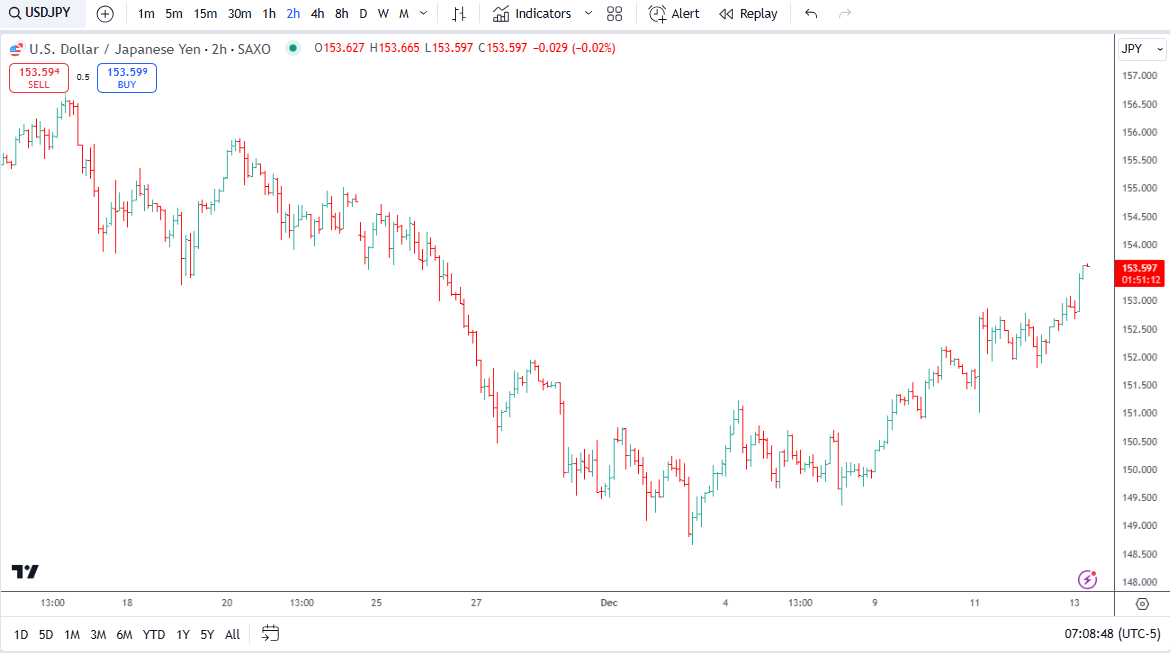
The coming yen rally might last for quite a while, as it should be very large. I prefer carrying a basket of short currencies against a long yen position rather than focusing on dollar/yen. Do I have a favorite? Right now, I don’t really have one favorite as I am expecting considerable US dollar strength over the short term against nearly all major currencies, with the possible exception of the yen. In fact, I don’t believe that extensive yen strength against the dollar will develop until the US stock market finally starts a long overdue significant correction. Therefore, I would sell a basket of euros, Canadian dollars, Australian dollars, New Zealand dollars, British pounds, and Swiss francs against the yen, with fairly even weightings in each pair. I will also have a modest short dollar/yen exposure, but the cross plays will be far larger.
What are my targets? Depending on the time horizon, my targets have huge ranges. For example, let’s have a look at a weekly chart of aud/jpy – the Australian dollar versus the Japanese yen.

It wouldn’t surprise me to see an initial move lower in the cross toward the 90.15 level, retesting the recent lows from August this year. Longer term, I think there is a good chance that eventually, the Aussie might weaken to 86.00, 78,00, and even 60.00 against the yen, retesting the lows of the Covid era in March of 2020. These moves will require some reasonable time to play out, so you either need to be very patient, or you should try to play for these moves in stages.
Overall, we will almost certainly have increased currency volatility in 2025. We now have extreme divergences in economic performance among the various major economies, and these divergences could grow larger. The US is clearly outperforming all of the other countries referenced above, i.e. Canada, Australia, New Zealand, the eurozone, the UK, and to a lesser extent, Japan. With the threat of tariffs looming, the outperformance of the US will likely become even more glaring.
The US is in a unique position right now due to its relatively strong economy. In fact, the Fed is doing everything possible to reinforce the notable economic outperformance of the US over the short term by focusing exclusively right now on supporting the job market. We need to ignore the Fed’s talk and watch their behavior. Barring an unexpected sharp slowdown in growth, continued rate cuts by the Fed in 2025, however, will create the very real risk of institutionalizing a higher level of inflation than they dare admit. The pace of Fed rate cuts is almost certain to slow, with the result that the US dollar will likely reign supreme against all of the other currencies with the possible exception of the yen.
Once the new administration takes office, there will likely be powerful fiscal support to further cement the relative strength of the US economy. Unlike the challenges among the US’s major trading partners who are struggling with sub-par economic performance, the major challenge in the US will be to somehow fend off investors’ dual concerns about a resurgence in inflation and the ever-growing fiscal deficit. The Fed will have a very tough job to somehow keep interest rates low enough to make the burden of our massive debt financing somewhat tolerable while simultaneously keeping a lid on inflation.
The jury is out, but there are a lot of very smart people who are seriously concerned about the potential inflationary impact of the tariffs that Trump has promised to implement. Yes, there will be some derivative benefits. In particular, US manufacturing is largely hollowed out, and it is very likely that high tariffs will force the US to retool its manufacturing capacity. There is no doubt that the US has the capacity to do this, but this process will only happen under some duress – and tariffs might very well do the trick.
Of course, there will be dramatically negative consequences for the countries that have become addicted to the staggeringly high levels of demand by the US for cheap imports. China, for example, is already struggling, and they will likely be forced to let their currency weaken further. They have many tremendous economic problems, and Trump will almost certainly try to take full advantage of China’s current vulnerability. The years of 8% and 10% annual economic growth in China are gone. The new tariffs on Chinese imports by the US will undoubtedly exacerbate their already serious domestic situation.
Among the various issues facing China right now – aside from the coming imposition of extremely damaging tariffs – are the following:
- Economic Slowdown: China's economy is experiencing slower growth due to factors like the lingering effects of the zero-Covid strategy and weakening global demand.
- Youth Unemployment: High youth unemployment rates are a significant concern, with many young people struggling to find stable jobs.
- Property Market Issues: This is a massive problem, as the real estate sector is in total disarray, with major developers like Evergrande facing severe financial difficulties. There is a large amount of unsold housing inventory, estimated to be worth around $13 trillion. This oversupply has led to falling property prices and reduced profitability for developers. The Chinese property market is also struggling due to homebuyers refusing to make mortgage payments. This has created a cash flow crisis for developers and increased financial instability in the market. These problems have led to a funding crisis, as developers have struggled. This in turn has led to many paused projects and unfinished buildings. The pre-sale system, where buyers pay for properties before they are built, has exacerbated these problems.
- Trade Tensions: Ongoing trade tensions with major economies, particularly the United States, are impacting China's export markets.
- Currency Depreciation: The Chinese yuan has been weakening against the US dollar, creating uncertainty in financial markets and making it difficult for the central bank to stimulate the economy.
- Reduced Global Demand: Demand for Chinese goods has declined in countries like the US due to higher interest rates, inflation, and geopolitical tensions.
These issues are creating a complex economic environment for China, with enormous implications for both domestic and global economies. The dollar has recently strengthened quite a bit against the Renminbi, and more dollar strength might follow. For sure, China’s problems will have some deleterious regional side-effects on Australia, and New Zealand. It is a fair bet to expect the Aussie dollar and the kiwi to struggle; against both the US dollar and the yen, which is more insulated from Chinese problems.
Australia and New Zealand have particularly strong economic ties with China, and these ties will lead to some exceptional trading opportunities with short Aussie and Kiwi exposures. Here are some potential effects:
- Trade Disruptions: Both countries export a substantial amount of goods to China, including commodities like iron ore, coal, and agricultural products. A slowdown in China's economy could lead to reduced demand for these exports, impacting revenues and economic growth in Australia and New Zealand.
- Commodity Prices: China is a major consumer of commodities. A decline in Chinese demand can lead to lower global commodity prices, affecting the income of Australian and New Zealand exporters.
- Investment Flows: Chinese investments in infrastructure and real estate in both countries could slow down, affecting local economies and employment.
- Tourism: Reduced spending power and economic uncertainty in China could lead to fewer Chinese tourists visiting Australia and New Zealand, impacting the tourism sectors in both countries.
- Supply Chain Disruptions: Many businesses in Australia and New Zealand rely on Chinese manufacturing and raw materials. Economic problems in China could disrupt supply chains, leading to production delays and increased costs.
- Financial Markets: Economic instability in China can create volatility in global financial markets, affecting investments and financial stability in Australia and New Zealand.
In fact, New Zealand is already lobbying the incoming administration to be kind to them vis-à-vis tariffs. Canada is doing likewise. Trump’s response to these pleas has been almost comically dismissive. For example, his response to Prime Minister Trudeau’s request for clemency was a somewhat shocking off-handed joke that perhaps Canada could become the 51st state. Trudeau was stupefied and really had no idea how to respond. Trump really believes that Canada and Mexico are being unfairly subsidized by the US to the tune of hundreds of billions of dollars every year, and he is seriously determined to shift the balance. More significantly, Trump is intent on choking off the flood of cheap Chinese imports that are being secretly routed through Mexico.
The ECB lowered interest rates in the Eurozone yesterday, and they will be lowering rates multiple times in the coming months. The economic problems in that region could easily lead to the euro dropping below parity with the US dollar. I expect the move to continue grinding slowly at first, and only accelerating over time. The weakness in the euro versus the yen could be far more dramatic once the yen starts its next bullish cycle against the US dollar.
The Swiss have aggressively cut interest rates, and they are very focused on trying to stimulate their domestic economy. In fact, Japan is the only major nation right now that is not in a rate-cutting mode. Their rates are already extremely low, but they will almost certainly be gradually raising rates. This relative narrowing of interest rate differentials will lead to some accelerated yen buying by Japanese investors, who will almost certainly be reducing their various yen hedges against most major currencies.
Historically, the Swiss franc has also been a safe-haven currency, but it seems that the Swiss National Bank is determined to weaken their currency to help stimulate the economy. They have sharply reduced interest rates, and there is a chance that the franc’s long-term strength against the yen is finally going to reverse. The downside potential for this cross is absolutely massive. Consider the following chart.

It is not hard to imagine a correction back to the 135-140 level in this cross, as it is relatively modest percentage of the massive advance that the Swiss franc has made. Moves of this magnitude are extremely unusual in currencies, and they take a long time, so we need to be very patient if we want to try to participate in this long-term move.
In any event, I think this is enough about currencies. Next week I will write about stocks, as there are a number of very interesting opportunities that I see developing over the coming weeks and months. Suffice it to say that the nearly unanimous bullishness on stocks next year by Wall Street analysts will create an interesting dynamic. Do I see some further upside in stocks? In the short-term, yes. Over the longer term, I see a variety of risks looming. I also see some excellent opportunities in a number of individual stocks that we like to follow.
In the meantime, I wish you all the best of luck with your trading.